Sleep Gadgets: 10 Proven Devices to Improve Your Sleep Quality
Ten sleep gadgets worth considering in 2026, how they actually work, what the science says, and real cases of exaggerated marketing to avoid.
Sleep gadgets have turned into a genuine industry, not just a shelf of gimmicks at the back of an electronics store. More people are tracking their rest, tweaking their bedroom temperature, and buying devices that promise deeper, longer sleep. Some of that is justified. Poor sleep is tied to weight gain, weakened immunity, memory problems, and a long list of health issues that most people would rather avoid. So it makes sense that we’re reaching for technology to fix something that feels hard to control on our own.
But here’s the part that doesn’t get said enough: not every gadget marketed for better rest actually delivers what it claims. Some companies have been sued or fined for selling devices with sleep-tracking features that simply didn’t work as advertised, or for making health claims they couldn’t back up. That history matters, because it tells you how to shop smarter.
This article covers ten sleep gadgets that are genuinely useful when you understand their limits, plus a look at what happened when companies overpromised. By the end, you’ll know what’s worth buying, what to be skeptical of, and how to tell the difference.
Why Sleep Quality Matters More Than You Think
Before getting into the gadgets, it helps to understand why this topic gets so much attention. The National Institutes of Health has pointed out that sleep trackers typically rely on movement sensors rather than the gold-standard methods doctors use, such as polysomnography, which means consumer devices measure a proxy for sleep rather than sleep itself. That distinction is worth keeping in mind throughout this list, because it shapes how much trust you should place in any single device’s numbers.
Chronic poor sleep has been linked by researchers to higher risks of heart disease, type 2 diabetes, anxiety, and reduced cognitive performance. Most adults need somewhere between seven and nine hours a night, yet a large share of people fall short of that regularly. Sleep quality, not just quantity, is the piece that gadgets are trying to address: fewer wake-ups, deeper stages of rest, and a more consistent circadian rhythm.
What to Look for Before Buying Sleep Gadgets
Not all sleep tech is created equal. A little homework before you buy saves money and disappointment.
Check the Evidence, Not Just the Marketing
Look for products that cite peer-reviewed studies or independent lab testing, not just customer testimonials. A company that only shows glowing reviews and no data is usually hiding something.
Understand What’s Being Measured
Many sleep trackers estimate sleep stages using heart rate and motion, not direct brain activity. That’s fine for spotting trends over time, but it’s not a diagnostic tool.
Review the Data Privacy Policy
Sleep gadgets often collect biometric data overnight. Check how that data is stored, whether it’s sold to third parties, and whether you can delete it.
Confirm the Return Policy
Sleep is personal. What works for one person’s insomnia might do nothing for another’s. A company confident in its product usually offers a real trial period.
A Reality Check: When Sleep Gadget Marketing Went Too Far
It’s worth pausing here, because this is where the “realities” part of this topic matters. The sleep gadget industry has a documented history of overselling.
One of the most cited examples involves Fitbit. A class action lawsuit filed in 2015 alleged that the company’s sleep-tracking function was marketed as able to measure how long users slept, how often they woke up, and their overall sleep quality, when in reality the feature could only track movement and not sleep directly. The case moved forward after a federal judge rejected Fitbit’s attempt to have it dismissed, and it eventually settled.
More recently, the Federal Trade Commission took action against a major mattress brand. The FTC reached a settlement with Nectar Sleep’s parent company over false claims that its products were made in the United States. Separately, other sleep product makers have faced lawsuits over claims that weighted sleep products were designed according to official pediatric safety guidelines when they allegedly were not, and over fake “limited-time” discount pricing on mattresses.
None of this means every sleep gadget is a scam. It means the category has enough history of inflated claims that a skeptical, informed buyer does better than someone who trusts packaging at face value. With that context, here are ten gadgets that hold up when used for what they’re actually good at.
10 Gadgets That Can Improve Your Sleep Quality
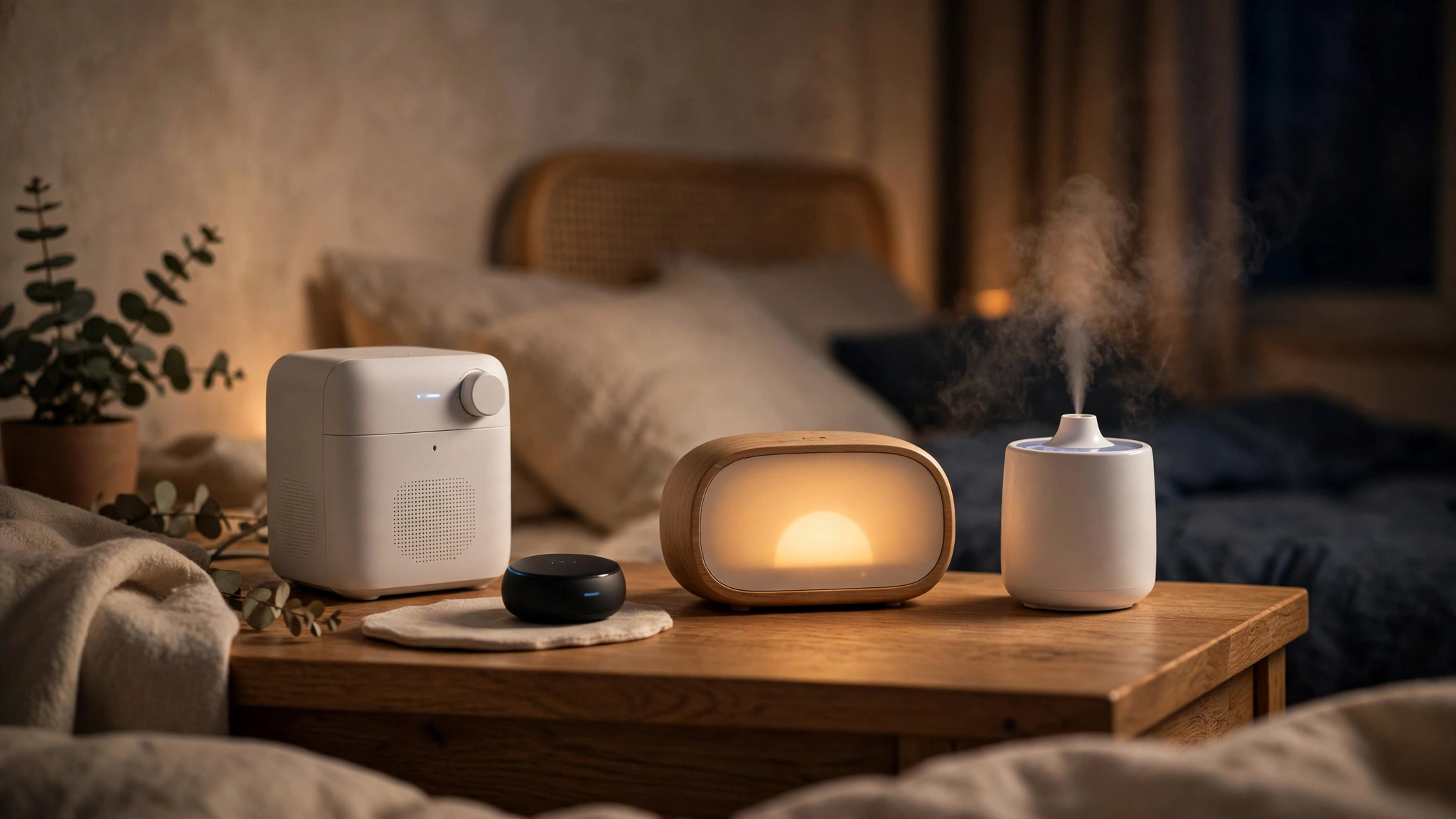
1. White Noise Machines
White noise machines mask disruptive background sounds like traffic, a snoring partner, or noisy neighbors. Research on sound masking suggests it can help people fall asleep faster and experience fewer awakenings, particularly in noisy environments like apartments or shared housing.
What to look for:
- Multiple sound options (white, pink, or brown noise) rather than a single tone
- A timer function so it doesn’t run all night unnecessarily
- Simple hardware over an app-dependent version, since fewer things can go wrong
2. Weighted Blankets
Weighted blankets use deep pressure stimulation, a sensation similar to a firm hug, which some studies associate with lower cortisol and increased melatonin release. They’re especially popular among people with anxiety or sensory processing differences.
A good rule of thumb is choosing a blanket around 10% of your body weight. Heavier isn’t automatically better, and overheating is a common complaint, so look for breathable fabric if you sleep hot.
3. Smart Sleep Trackers (Rings and Wearables)
Smart sleep trackers, including rings and wristbands, estimate sleep stages, heart rate variability, and overnight movement. They’re useful for spotting patterns over weeks, like a correlation between late workouts and restless nights.
The caveat from earlier still applies here: these are estimates, not medical diagnoses. If a tracker consistently shows very low sleep efficiency or signs of a breathing issue, that’s a reason to see a doctor, not just adjust a setting in an app.
4. Cooling Mattress Pads and Toppers
Body temperature drops naturally as part of falling asleep, and a bedroom or mattress that’s too warm can interrupt that process. Cooling mattress pads use gel layers, airflow channels, or active water-cooling systems to regulate surface temperature throughout the night.
These tend to help most for people who run hot, share a bed with someone who prefers a different temperature, or live somewhere without reliable air conditioning.
5. Sunrise Alarm Clocks
Also called light therapy alarms, these devices simulate a gradual sunrise before your wake-up time instead of jolting you awake with sound. The idea is rooted in circadian biology: light exposure, particularly in the morning, helps regulate the body’s internal clock.
They’re especially useful in winter months or for people who wake up before daylight, when natural light cues are missing.
6. Smart Thermostats for Bedroom Climate Control
A smart thermostat that can be scheduled to cool the bedroom before bedtime and warm it slightly before waking supports the same temperature-drop mechanism as cooling mattress pads, but for the whole room. Sleep researchers generally point to a bedroom temperature around 65°F (about 18°C) as ideal for most adults, though personal preference varies.
7. Blue Light Blocking Glasses
Screens emit blue wavelength light that can suppress melatonin production and delay the body’s natural wind-down process. Blue light blocking glasses filter out some of that wavelength in the evening hours.
This is one area where the research is mixed. Some studies show meaningful benefit, others show a weaker effect than marketing suggests. The more consistently helpful habit is simply reducing screen time before bed, and glasses are a reasonable backup for people who can’t avoid evening screen use entirely, such as shift workers or parents on call.
8. CPAP Devices and Sleep Apnea Monitors
For people diagnosed with sleep apnea, a CPAP machine isn’t optional tech, it’s medical equipment prescribed after a sleep study. Modern CPAP devices have gotten quieter, smaller, and more comfortable, with some connecting to apps that track usage and effectiveness.
This category is also where honest marketing matters most. According to the American Academy of Sleep Medicine, untreated sleep apnea carries real cardiovascular risk, and devices should be fitted and monitored through a healthcare provider rather than purchased casually based on an ad.
9. Smart Pillows
Smart pillows adjust firmness, incline, or even gently vibrate to reposition someone who’s snoring. Some models track head movement and integrate with sleep apps for a fuller nightly picture.
These are a smaller, newer category, so it’s worth reading independent reviews rather than relying only on manufacturer claims, given how recent some of these products are to the market.
10. Bedroom Air Purifiers
Air quality affects sleep more than people expect. Allergens, dust, and pollutants can trigger congestion or mild respiratory irritation that interrupts rest without you necessarily noticing why. A HEPA air purifier in the bedroom can reduce these irritants, particularly helpful for people with allergies or asthma.
How to Use Sleep Gadgets Without Becoming Dependent on Them
It’s worth naming a real pattern that’s emerged alongside this technology: some people develop anxiety about their sleep data itself, a phenomenon sleep researchers have started calling “orthosomnia.” Checking a tracker obsessively, or feeling distressed by a low sleep score even when you feel fine, defeats the purpose.
A few habits help keep gadgets in their proper place:
- Use trends over weeks, not single nights, to judge whether something is working
- Don’t let a bad score from a tracker create anxiety that itself disrupts sleep
- Treat gadgets as supporting good sleep hygiene, not replacing it (consistent bedtime, limited caffeine, a dark room)
- If a device suggests a possible medical issue, follow up with a doctor instead of trying to self-treat with more gadgets
Red Flags: How to Spot Misleading Sleep Tech Marketing
Given the lawsuits and settlements mentioned earlier, here’s a practical checklist before buying:
- Vague percentage claims (“improves sleep by 73%”) without a citation to a specific, reviewable study
- “Clinically proven” language with no named clinical trial or published results
- Country-of-origin or safety-standard claims that aren’t verifiable on the company’s own site
- Countdown timers or “limited stock” pressure on pricing, a tactic regulators have flagged in sleep product advertising before
- No mention of what the device actually measures (movement vs. brainwaves vs. temperature), just a general promise of “better sleep”
If you want a deeper read on how sleep trackers actually measure sleep stages, the Sleep Foundation has a clear, independently reviewed breakdown worth checking before you buy. For general sleep health guidelines backed by research, the CDC’s sleep and health resources are a solid, no-nonsense reference point.
Conclusion
Sleep gadgets can genuinely help when you understand what they do and don’t do. White noise machines, weighted blankets, cooling mattress pads, sunrise alarms, smart thermostats, and the rest of this list each address a specific piece of the sleep puzzle, whether that’s sound, temperature, light, or pressure. What they can’t do is replace basic sleep hygiene, and they shouldn’t be trusted blindly just because a package says “clinically proven.” The industry’s own history, including lawsuits over inaccurate sleep tracking and FTC action over false advertising, shows why a skeptical, informed buyer ends up better off than someone chasing the newest gadget. Pick the tools that address your actual problem, give them a few weeks of honest trial, and keep your expectations grounded in what the technology can realistically do.