15 Must-Have Gadgets for 2027: Essential Tech Worth Your Money
A practical guide to the must-have gadgets for 2027, covering real benefits, pricing, and the legal lines buyers should know before using them.
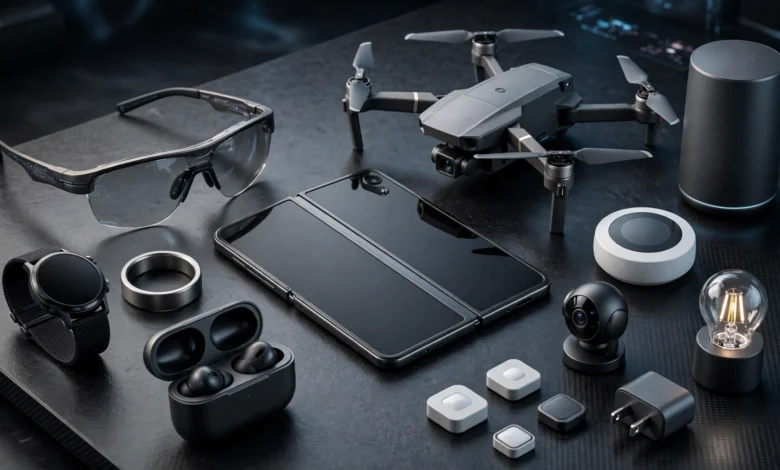
Must-have gadgets for 2027 are shaping up to be less about flashy demos and more about devices that actually solve problems: battery life, privacy, repairability, and genuine usefulness. After a decade of gadget fatigue, where every new product promised to change your life and most ended up in a drawer, the 2027 lineup looks different. Manufacturers are responding to real complaints. People want devices that last longer, respect their data, and don’t require a PhD to set up.
This list covers the 15 must-have gadgets for 2027 worth your attention, chosen for practical value rather than hype. Each one solves a specific problem: connectivity, health tracking, home security, productivity, or convenience. But a gadget guide that only talks about features misses half the story. Many of these categories, especially trackers, smart locks, hidden cameras, and drones, have a documented history of misuse. GPS trackers have been used to stalk partners. Spy cameras have shown up in rentals and locker rooms. Drones have been flown over private property and restricted airspace. None of that means the technology is bad. It means buyers need to understand both the legitimate use case and the legal line next to it.
So alongside each gadget, you’ll find a short, honest note on the ethical and legal side: what’s allowed, what isn’t, and a real example where things went wrong. The goal isn’t to scare you off smart technology. It’s to help you buy and use these tools the way they’re meant to be used, without becoming a cautionary tale yourself. Let’s get into the 15 must-have gadgets for 2027.
The 15 Must-Have Gadgets for 2027, Ranked by Real-World Value
1. AI-Powered Smart Glasses
Smart glasses have finally moved past the novelty stage. The 2027 generation pairs a lightweight frame with a small display, a camera, and an on-device assistant that can translate signs, read messages aloud, and give turn-by-turn directions without pulling out your phone.
What makes them a must-have gadget for 2027:
- All-day battery life thanks to more efficient micro-LED displays
- Real-time translation for travel and business
- Hands-free navigation and note-taking
The ethical reality: Built-in cameras raise real privacy questions. Several early smart glasses were pulled from stores or restricted in gyms, bars, and schools after people used them to record others without consent. If you wear a pair, a simple rule applies: don’t record people who haven’t agreed to it, and don’t wear them anywhere cameras are explicitly banned.
2. Compact Home Energy Storage Units
Grid instability and rising electricity costs have pushed households toward small-scale battery storage. These units, now about the size of a suitcase, store solar or off-peak grid power and can run key appliances during an outage.
Key benefits include:
- Lower electricity bills through off-peak charging
- Backup power during storms or grid failures
- A smaller carbon footprint when paired with solar
These systems are straightforward to use legally and safely as long as installation follows local electrical codes. Skipping a licensed electrician to save money is the main risk here, since improper installation has caused house fires in a handful of documented cases.
3. Foldable and Rollable Phones
Foldables are no longer a gimmick. By 2027, rollable displays that expand from phone to tablet size are reaching the mainstream, and the crease and hinge durability issues that plagued early models are mostly solved.


Why it matters: A rollable screen means one device replaces both your phone and your tablet, which is genuinely useful for anyone who reads, edits documents, or watches video on the go.
The catch: Resale scams involving counterfeit foldables have increased as the category has grown. Buyers have lost money on fake listings for flagship rollable phones on marketplace apps. Buy from authorized retailers, and if a deal looks too good, it probably is.
4. Smart Rings for Health Tracking
Smart rings track sleep, heart rate, and recovery without the bulk of a smartwatch. They’ve become one of the most requested must-have gadgets for 2027 among people who want health data without wearing a screen on their wrist.
Benefits worth noting:
- Multi-day battery life
- Accurate sleep and recovery tracking
- Discreet design that works with any outfit
The privacy consideration here is data, not surveillance. Health data from wearables has been subpoenaed in legal cases and, in at least one widely reported incident, used in a criminal investigation without the wearer’s knowledge. Read the privacy policy before you hand over your biometric data, and know what your health app actually does with it.
5. Advanced Home Security Cameras
Home security cameras with on-device AI can now tell the difference between a delivery driver, a pet, and an intruder, cutting down on false alerts. Local storage options have also improved, so footage doesn’t have to live permanently on a company’s servers.
Legitimate use: Monitoring your own property, deterring package theft, checking in on pets.
Where it goes wrong: Hidden or disguised cameras placed in bathrooms, bedrooms, or rental properties without occupants’ knowledge are illegal in most jurisdictions and have led to real criminal prosecutions, including cases involving landlords and short-term rental hosts caught secretly filming guests. A camera pointed at your own front door is normal. A camera hidden inside someone else’s private space is a crime.
6. Personal GPS Trackers
Compact GPS trackers are useful for keeping tabs on luggage, bikes, cars, and even aging parents who’ve agreed to be tracked for safety. Battery life has improved enough that a single charge can last months.
Good uses include:
- Recovering stolen property
- Fleet and vehicle management for small businesses
- Finding lost luggage or bags
The hard line: Placing a tracker on someone else’s vehicle or belongings without their consent is illegal in most places and has been the basis of real stalking and domestic violence cases. The Cybersecurity and Infrastructure Security Agency has publicly warned consumers about covert tracking and monitoring tools being used against smartphone users without their knowledge, a pattern that led to federal enforcement action against companies selling these tools for that purpose. If you wouldn’t tell the person their location is being tracked, don’t do it.
7. Portable Power Stations
Larger than a power bank but smaller than a generator, portable power stations now pack enough capacity to run a laptop, a mini-fridge, or medical equipment for a day or more. They’ve become a staple for campers, remote workers, and anyone preparing for power outages.
Why they’re worth buying:
- Silent operation compared to gas generators
- Solar panel compatibility for off-grid charging
- Multiple outlet types in one unit
There’s little controversy here beyond standard battery safety: store them away from heat, and buy from brands with proper safety certification rather than unverified budget listings.
8. Noise-Cancelling Translation Earbuds
Real-time translation earbuds have gone from novelty to genuinely useful, handling dozens of languages with low enough latency for actual conversation. Combined with active noise cancellation, they double as everyday earbuds.
This is one of the easiest must-have gadgets for 2027 to recommend for travelers, international business teams, and anyone learning a new language, with no meaningful ethical downside beyond standard data privacy practices for any connected device.
9. Smart Locks With Biometric Access
Smart locks now support fingerprint, face recognition, and temporary digital keys you can send to guests or service providers, all without giving out a physical key.
Practical upside:
- No more rekeying locks after a lost key
- Remote access logs showing who entered and when
- Easy temporary access for cleaners or contractors
Real-world caution: A smart lock is only as secure as its app. Several smart lock brands have had security flaws exploited by hackers to gain unauthorized entry, and there have been documented burglaries linked to compromised smart lock accounts. Use two-factor authentication and keep the lock’s firmware updated.
10. Electric Micro-Mobility Vehicles
E-bikes and compact electric scooters have matured into reliable daily transportation rather than novelty rides. Better batteries, built-in lights, and smarter motor controls have made them safer and more practical for commuting.
Reasons they’re on this list:
- Lower cost than car ownership for short commutes
- Reduced emissions compared to driving
- Faster than walking, cheaper than rideshares
The legal reality: Rules vary widely by city, and riders have faced fines or impoundment for exceeding local speed and power limits, or for riding on sidewalks where it’s banned. Check your local regulations before buying, since what’s legal in one city can get your scooter confiscated in another.
11. AI Home Assistants With Local Processing
The newest home assistants process voice commands on-device instead of sending every word to the cloud, addressing one of the biggest criticisms of earlier smart speakers.
Why this update matters: On-device processing means faster responses and far less of your conversation leaving your home network, which matters given past incidents where smart speaker recordings were subpoenaed in court cases or accessed by employees reviewing audio clips for quality control.
Buying tip: Look specifically for a device that advertises on-device processing rather than cloud-only, and review what data, if any, still gets sent out.
12. Smart Luggage and Tracking Tags
Smart luggage with built-in tracking tags has become one of the more practical must-have gadgets for 2027 for frequent travelers, letting you see exactly where a lost bag ended up instead of waiting on an airline’s best guess.
Clear benefits:
- Real-time location updates through airport and airline systems
- Reduced anxiety around lost luggage
- Removable batteries that meet airline carry-on rules
Airlines have specific battery regulations for smart luggage, and travelers have had bags held or batteries confiscated for not meeting removable battery requirements. Check your airline’s rules before you fly.
13. Mixed Reality Headsets for Work
Mixed reality headsets have shifted from gaming toys to legitimate productivity tools, letting remote teams collaborate in shared virtual spaces and letting designers and engineers review 3D models without a physical prototype.
Where they add real value:
- Remote collaboration that feels more present than a video call
- Training simulations for high-risk jobs like equipment repair
- Design review without flying a team across the world
The main consideration is screen time and motion sensitivity rather than anything illegal. Take breaks, and don’t expect every use case marketed at launch to actually stick around.
14. Compact Air Quality and Environmental Monitors
Wildfire smoke, industrial pollution, and poor indoor ventilation have made personal air quality monitors genuinely practical rather than a luxury. These compact units track particulate matter, humidity, and carbon dioxide levels in real time.
Why people are buying them:
- Early warning before air quality affects health
- Data to justify running an air purifier or opening windows
- Useful for people with asthma or allergies
There’s no significant misuse pattern here. This is one of the more straightforwardly positive additions to the must-have gadgets for 2027 list, aside from the usual advice to buy from a brand that’s been independently tested for accuracy.
15. Personal Safety Alarms With Discreet Alerts
Small, button-activated safety alarms that send a location alert to chosen contacts have grown more sophisticated, with some models disguised as everyday accessories like keychains or bracelets.
Where they help:
- Walking alone at night
- Solo travel in unfamiliar areas
- Elderly users who want quick access to help
Worth knowing: These devices are designed for the person wearing them, not for monitoring someone else. Using a “safety” device to covertly track a partner or family member without their knowledge crosses into the same legal territory as covert GPS trackers, and courts have treated it the same way in domestic abuse cases. Buy one for yourself or give one as a gift to someone who wants it, not as a way to keep tabs on someone who doesn’t know they’re being watched.
Buying These Gadgets Responsibly
A few habits make the difference between a smart purchase and a regretted one:
- Read the privacy policy, at least the summary. Know what data a device collects and where it goes.
- Register your devices where required. Drone owners, for instance, are required to register with the Federal Aviation Administration if their aircraft weighs more than 0.55 pounds, and flying unregistered has led to real fines.
- Get consent before recording or tracking anyone else, even people you trust. A relationship doesn’t override someone’s legal right to privacy.
- Buy from authorized retailers to avoid counterfeit units and warranty headaches.
- Keep firmware updated, since most of the security breaches tied to smart devices come from skipped updates rather than sophisticated hacking.
None of this is about being paranoid. It’s the same basic judgment you’d apply to any powerful tool: use it for what it’s built for, respect the people around you, and know the rules before you need them.
FAQs About Must-Have Gadgets for 2027
Are must-have gadgets for 2027 actually worth upgrading for, or is it just marketing?
Some are, some aren’t. The gadgets on this list earned a spot because they solve a specific, ongoing problem, not because they’re new. If a device from 2024 still does the job, there’s no reason to replace it just because 2027 has arrived.
Which gadget on this list carries the most legal risk if misused?
GPS trackers and hidden cameras carry the clearest legal risk. Both have documented cases of being used for stalking or covert surveillance, and both come with real criminal and civil penalties when used without consent.
Do I need to register every smart device I buy?
No, most don’t require registration. Drones are the clearest exception, since the FAA requires registration for most models. Smart rings, earbuds, and home assistants don’t carry that requirement.
Conclusion
The must-have gadgets for 2027 reflect a tech industry that’s finally paying attention to what people actually complained about: short battery life, privacy intrusions, and gadgets that solve problems nobody had. From AI smart glasses and smart rings to home batteries and mixed reality headsets, this year’s lineup is more useful and more mature than what came before it. But usefulness comes with responsibility. Trackers, cameras, and monitoring tools on this list have real, documented histories of misuse, from stalking cases built on hidden GPS trackers to hidden cameras found in rental properties. Buying smart means understanding both sides: what a gadget can do for you, and where the legal and ethical line sits when it comes to using it around other people. Choose the devices that solve a real problem in your life, buy from reputable sellers, keep your software updated, and use every camera, tracker, and sensor the way it was actually meant to be used.