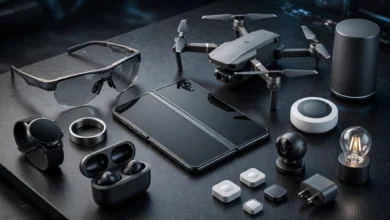
10 Travel Gadgets That Make Life on the Road Easier
A practical, no-hype guide to travel gadgets that actually hold up on the road, plus the carry-on rules and legal limits travelers often miss.
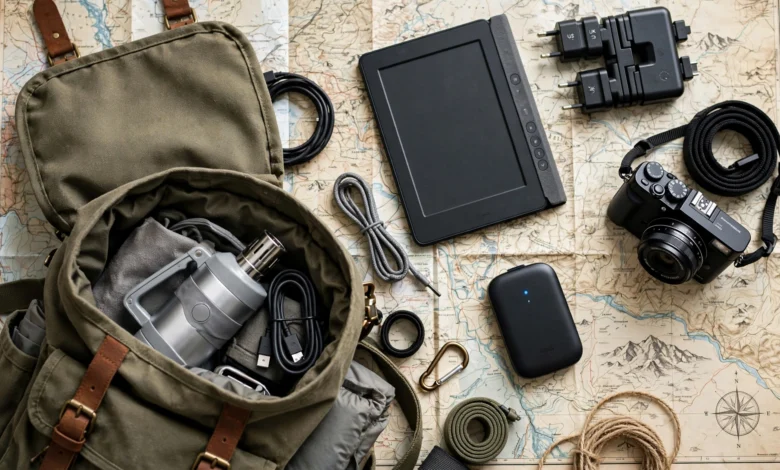
Travel gadgets have quietly become one of the biggest differences between a trip that flows and one that drains you. It’s not about owning the most expensive tech or filling a carry-on with gear you’ll never touch. It’s about having the right few items that solve real problems: a dead phone at hour eleven of a travel day, an outlet that doesn’t match your plug, a hotel Wi-Fi signal too weak to join a work call.
This guide is built around that idea. Every item here earns its spot in your bag because it solves something travelers actually run into, not because it looks good in a product photo. We’ll also cover something most gadget roundups skip: the rules. Power banks get confiscated at airport security every single day. Drones get seized at customs. People lose expensive gear because they didn’t check a regulation that took five minutes to look up. None of that is dramatic or complicated to avoid, but it does require knowing the basics before you pack.
So this is a grounded, honest look at travel gadgets worth buying in 2026, how to use them responsibly, and where the legal lines actually sit. No filler, no gear you’ll regret buying, and no pretending every shiny new release is a must-have.
What Makes a Travel Gadget Actually Worth Packing
Before getting into the list, it helps to know what separates a genuinely useful travel gadget from something that just sounds impressive online. Competing roundups tend to lean on brand names and flashy specs. The travelers who actually log serious miles care about different things:
- Size and weight. If it doesn’t fit in a jacket pocket or a small pouch, it needs to earn that space with real utility.
- Durability. Gear that survives one trip in a showroom means nothing. It has to survive drops, spills, and being crammed into an overhead bin.
- Dual purpose. The best travel accessories solve more than one problem. A charger that also organizes cables. A pillow that also supports your neck during work calls.
- Compliance. Anything with a battery, a camera, or a transmitter needs to meet airline and customs rules, which we’ll get into below.
- Low failure risk. Gadgets that depend on a fragile app, a proprietary charging cable, or a spotty Bluetooth connection cause more stress than they solve.
Keep these filters in mind as you read through the list, because the “best” gadget is really just the one that matches how you actually travel.
10 Travel Gadgets That Make Life on the Road Easier
1. A Universal Travel Adapter
This is the single most practical item on any travel gadgets list, and it’s the one people forget until they’re standing in a hotel room with a dead phone and the wrong plug shape. A good universal adapter covers US, UK, EU, and AU/NZ plug types in one compact unit, and the better ones include built-in USB-A and USB-C ports so you’re not juggling a separate charging brick.
Look for one rated for the voltage range of the countries you’re visiting (100–240V covers almost everywhere), and avoid the ultra-cheap models that don’t list a safety certification. A $12 adapter that melts in an outlet is not a bargain.
2. A TSA-Compliant Power Bank
A portable charger is non-negotiable for long flights, train rides, and days spent sightseeing away from an outlet. But this is also the gadget most likely to cause problems at security, so the rules matter here more than almost anywhere else on this list.
Spare lithium-ion batteries, including power banks, must be carried in carry-on baggage only, and lithium-ion batteries are limited to a rating of 100 watt-hours per battery without special airline approval. That covers the vast majority of consumer power banks, including anything in the 10,000–20,000mAh range. Airlines have also started tightening their own rules on top of the baseline: several major US carriers introduced limits in 2026 capping passengers to one or two power banks per person and requiring them to stay within reach during the flight rather than stored in an overhead bin.
Before you fly:


- Check the watt-hour (Wh) rating printed on the bank itself, not just the mAh figure
- Never pack it in checked luggage, even by accident
- Keep it in an easily accessible pocket for screening
You can confirm current limits directly through TSA’s official guidance on lithium batteries before any trip, since airline-specific caps can be stricter than the federal baseline.
3. A Portable Wi-Fi Travel Router or Hotspot
Hotel Wi-Fi is inconsistent at best. A portable travel router or a dedicated hotspot device solves two problems at once: it gives you a stronger, more private connection than shared hotel networks, and it lets multiple devices connect through one account instead of each needing its own login.
This matters more than people expect for security reasons too. Public Wi-Fi networks in airports, cafes, and hotel lobbies are common targets for data interception. A personal hotspot keeps your traffic off networks you don’t control, which is a meaningfully safer habit for anyone working while traveling or handling sensitive accounts on the road.
4. Noise-Isolating Earplugs or ANC Headphones
Not every travel audio solution needs batteries. Loop-style silicone earplugs have become genuinely popular with frequent flyers because they cut consistent cabin noise without needing a charge, a case, or a Bluetooth pairing step. For longer hauls, active noise-canceling headphones still make a real difference on sleep quality and stress during a flight, especially on older aircraft with louder engine noise.
The right choice depends on your trip type:
- Short flights or trains: passive earplugs, zero maintenance
- Long-haul or red-eye flights: ANC headphones, worth the extra bulk
- Light packers: true wireless ANC earbuds as a middle ground
5. A Bluetooth Luggage Tracker
Lost luggage is one of the most common sources of travel stress, and it’s also one of the easiest problems to reduce with a cheap gadget. A small Bluetooth tracker tucked into a checked bag or a passport case gives you real-time location data through your phone, which matters a lot more than it sounds like when an airline tells you your bag is “somewhere in the system.”
Tuck the tracker into an interior pocket rather than an exterior one. Airlines have occasionally flagged exposed trackers during screening, and a hidden one is less likely to be removed or tampered with in transit.
6. A Multi-Port Fast Charger With Cable Organizer
If you travel with a phone, a laptop, and a camera, you’re probably also traveling with three separate chargers and a tangle of cables. A single multi-port GaN charger (the compact, high-efficiency chargers that became standard over the past few years) can replace all of them, often charging a laptop and two other devices simultaneously from one wall outlet.
Pair it with a small cable organizer pouch, and you eliminate one of the most common sources of carry-on clutter. This is a small change that has an outsized effect on how calm your bag feels to dig through.
7. An E-Reader for Offline Entertainment
A dedicated e-reader is still one of the most underrated travel gadgets available. It weighs almost nothing, the battery lasts for weeks rather than hours, and it works completely offline, which matters on long flights, trains through dead zones, or destinations with unreliable data coverage.
Compare that to reading on a phone or tablet, where notifications, battery drain, and screen glare all work against you. A single-purpose device sounds old-fashioned, but for this specific job, it beats a multi-purpose one.
8. A Compact, Supportive Travel Pillow
Comfort gadgets get dismissed sometimes because they don’t feel technical, but a poorly designed neck pillow genuinely affects how rested you are after a long trip. Newer compression and wrap-style pillows pack down smaller than the inflatable versions from a decade ago while offering more consistent support, which matters whether you’re trying to sleep on a plane or just stay comfortable during a long bus or train ride.
9. An RFID-Blocking Wallet or Security Pouch
Electronic pickpocketing, where a scanner reads contactless card data through a bag or pocket, is a real and documented risk in crowded tourist areas. It’s not as common as old-fashioned theft, but it’s cheap and simple to prevent. An RFID-blocking wallet or passport sleeve adds a layer of protection without changing how you use your cards day to day.
This is also a good moment to flag a reality check: some travelers have tried to bypass airport security or customs declarations using modified wallets, false-bottom bags, or hidden compartments marketed as “security gadgets.” Items designed or marketed for concealing currency or goods from customs declarations have led to real seizures and fines at borders worldwide. An RFID wallet that blocks a scanner is a legitimate privacy tool. A wallet built to hide contents from a customs officer is a different thing entirely, and it’s not worth the risk.
10. Packable Compression Cubes
Not a gadget in the traditional electronic sense, but compression packing cubes have become essential travel tech in their own right. They compartmentalize a bag, reduce wrinkling, and in many cases let you fit roughly 20–30% more into the same suitcase through compression zippers. For anyone trying to travel carry-on only, this is one of the highest-value, lowest-cost additions you can make.
Travel Gadgets and the Rules You Can’t Ignore
This is the part most roundups skip, and it’s exactly where travelers get into trouble. A few real, recurring situations are worth knowing before you pack:
Power banks and checked baggage. Every year, travelers have power banks confiscated or flagged at security because they packed them in checked luggage instead of a carry-on, or because the battery exceeded the 100Wh carry-on threshold without prior airline approval. This isn’t a gray area. It’s one of the most consistently enforced rules in air travel because of documented fire risk from lithium battery failures.
Drones and undisclosed border crossings. Drones over 250 grams require FAA registration in the United States, and most countries with developed aviation authorities, including Canada, the UK, and Australia, apply similar registration thresholds. Travelers have had drones seized at customs in multiple countries for flying without registration, operating in restricted airspace near airports or government buildings, or failing to declare the device on entry. Some destinations, including parts of the Middle East and Asia, restrict or outright ban consumer drones regardless of registration status. You can check registration requirements directly through the FAA’s official DroneZone portal before traveling with one.
VPN use in restricted countries. VPNs are legal in most of the world, but a handful of countries restrict or heavily regulate their use, and travelers have faced fines or had devices searched for using unauthorized VPN apps in those jurisdictions. If you’re traveling somewhere with known restrictions, it’s worth checking current local law rather than assuming a tool that’s normal at home travels with the same legal status.
Hidden compartments and customs declarations. As mentioned above, gadgets marketed around concealment, whether that’s hiding currency, electronics, or goods from a customs declaration, have led to real legal consequences for travelers who assumed a product’s marketing made it fine to use that way. If a gadget’s main selling point is evading a declaration or an inspection, that’s a signal to skip it.
None of this is meant to scare anyone off traveling with tech. It’s meant to save you the very avoidable experience of losing a $150 power bank or an expensive drone because a rule took five minutes to check and nobody checked it.
How to Choose the Right Travel Gadgets for Your Trip
Not every item on this list belongs in every bag. A weekend city trip and a three-week backpacking route call for different priorities. A few quick guidelines:
- Match gadgets to trip length. Short trips favor lightweight, single-purpose items. Longer trips justify a slightly heavier kit if it reduces daily friction.
- Prioritize by failure cost. A dead phone battery mid-trip is a bigger problem than a wrinkled shirt, so charge-related gadgets usually come first.
- Check destination-specific rules before buying. If you’re planning to bring a drone or a large power bank, confirm the destination country’s import and aviation rules before the trip, not at the airport.
- Avoid duplicate functions. If your phone already does something well (reading, note-taking, navigation), you probably don’t need a dedicated device for it.
- Test new gear before you leave. Confirm cables, chargers, and pairing steps work before day one of the trip, not during it.
Common Mistakes Travelers Make With Gadgets
A few patterns show up again and again:
- Packing a power bank in checked luggage out of habit, without checking current carry-on rules
- Buying a universal adapter that doesn’t actually support the destination’s voltage
- Assuming a drone legal at home is legal everywhere else
- Over-packing gadgets “just in case,” which adds weight without adding real utility
- Skipping a backup charging cable, which turns a minor inconvenience into a real problem if one cable fails
Most of these are avoidable with about ten minutes of planning before a trip, which is a small price for avoiding a confiscated device or a dead phone on day one.
Conclusion
The right travel gadgets aren’t about owning the newest release or the longest spec sheet. They’re about solving the specific, repeatable problems that come up on every trip: dead batteries, mismatched outlets, unreliable Wi-Fi, lost luggage, and uncomfortable flights. A universal adapter, a compliant power bank, a travel router, good earplugs or headphones, a luggage tracker, a multi-port charger, an e-reader, a supportive pillow, an RFID-blocking wallet, and compression cubes cover nearly every common pain point without turning your carry-on into a tech store. Just as important as the gear itself is knowing the rules around it. Power bank limits, drone registration, and customs declarations aren’t bureaucratic noise. They’re the difference between a smooth trip and losing expensive equipment at a checkpoint. Pack smart, check the regulations for wherever you’re headed, and the gadgets on this list will genuinely make life on the road easier.