How to Choose the Right Online Course for Your Career
Choosing the right online course for your career takes more than a quick search. Here's how to evaluate programs, avoid scams, and pick wisely.
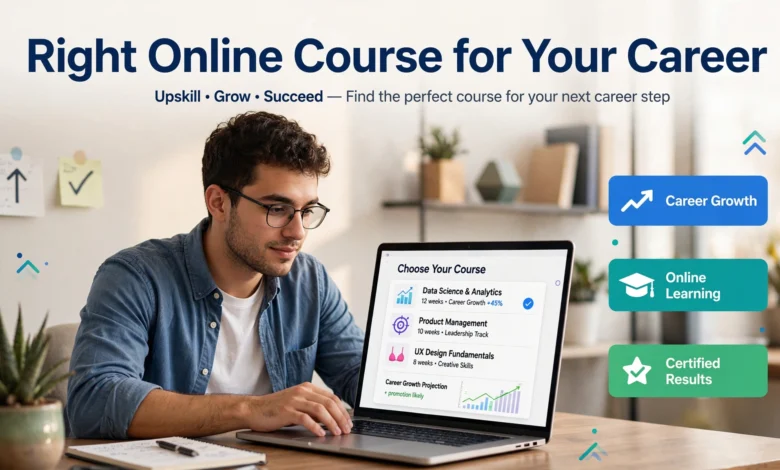
Choosing the right online course for your career is one of those decisions that looks simple from the outside and gets messier the moment you actually start looking. Open any search engine and you’ll find thousands of options promising to make you job-ready in weeks, land you a six-figure salary, or hand you a credential that “employers love.” Some of these claims are true. Many are not. And a few, as real enforcement cases over the past decade have shown, cross straight into fraud.
This matters because an online course is no longer a side purchase. It’s often a stand-in for a degree, a career pivot, or a few thousand dollars you don’t want to waste. The gap between a well-run program and a diploma mill isn’t always obvious from a landing page covered in testimonials and countdown timers. You have to know what to check before you hand over your card details.
This guide walks through a practical, honest process for picking an online course that actually moves your career forward. It covers how to define your goals, vet a provider’s legitimacy, judge course content and instructors, weigh cost against real return, and spot the warning signs of the scams regulators have already prosecuted people for running. By the end, you’ll have a checklist you can apply to any course, not just a list of generic tips.
Why Choosing the Right Online Course Matters More Than It Used to
A decade ago, online courses were a supplement to traditional education. Now they’re often the main event. Employers hire people with bootcamp certificates, Google and Microsoft badges, and self-taught portfolios built entirely through online learning. That shift is good news for flexibility and cost, but it also means the stakes of picking badly are higher.
A poorly chosen course can cost you in three ways:
- Money you don’t get back, especially with providers that don’t offer refunds
- Time you can’t spend on a program that would have actually worked
- Credibility if you list a credential on your resume that a hiring manager doesn’t recognize or, worse, finds was never real
None of this means online learning is risky by nature. Most providers are legitimate and deliver exactly what they promise. The goal here is to help you tell the difference quickly, before you’re three months and a few hundred dollars into something that isn’t going anywhere.
Step 1: Define Your Career Goal Before You Browse Courses
Before you open a single course catalog, get specific about what you’re actually trying to achieve. “I want to learn data analysis” is vague. “I want to move from an administrative role into a junior data analyst position within 12 months” is a goal you can actually plan around.
Ask yourself:
- Am I trying to change careers entirely, or add a skill to the job I already have?
- Does my target role require a formal credential, or just demonstrable skills?
- What does a job posting for my target role actually list as requirements?
Pull up three or four real job listings for the role you want and read the requirements section closely. This single step saves more wasted money than any other item on this list, because it tells you exactly what a course needs to deliver, rather than what a marketing page says it delivers.
Step 2: Research the Course Provider’s Reputation and Legitimacy
This is the step most people skip, and it’s the one that matters most. A course can have a beautiful website and glowing reviews and still be worthless, or worse, fraudulent.

Check for Real Accreditation, Not Just the Word “Accredited”
Plenty of fake schools use the word “accredited” without naming a recognized accrediting body, because the word alone sounds official. If a provider claims accreditation, verify it directly. In the United States, you can cross-check any institution against the Department of Education’s own records through the Database of Accredited Postsecondary Institutions and Programs. If the school or program isn’t listed and the accreditor it names isn’t recognized, treat that as a serious red flag, not a technicality.
Learn From Real Cases of Online Education Fraud
This isn’t a hypothetical risk. Regulators have shut down real operations built entirely around fake online credentials:
- The U.S. Federal Trade Commission has repeatedly prosecuted operators of fake online high schools. In one case, a Florida-based operation doing business as “Jefferson High School Online” and “Enterprise High School Online” charged consumers $200 to $300 for diplomas after a short multiple-choice quiz, while also fabricating an accrediting organization to make the scheme look legitimate. The operators were permanently banned from selling academic credentials.
- A separate, larger FTC action targeted operators running sites like “West Madison Falls High School” and “Columbia Northern High School,” charging $135 to $349 for diplomas that were, in the FTC’s own words, worthless.
- Beyond diplomas, entire networks of fake online “universities” have been exposed for selling degrees with no coursework at all, built purely to look credible to employers and immigration authorities.
The common thread in these cases is always the same: the sites looked professional, used official-sounding names, and relied on buyers not checking the fine print. You can read the FTC’s full breakdown of how these schemes operate, including the specific marketing claims to watch for, in its consumer guidance on diploma mills.
Other Legitimacy Checks
- Search the provider’s name plus words like “complaint,” “scam,” or “refund” to see what comes up
- Check how long the company has operated and whether it has a verifiable physical address
- Look for the provider on independent review sites, not just testimonials on their own homepage
- See whether real professionals in your target field have heard of the credential
Step 3: Evaluate the Curriculum and Course Content in Detail
Once you’ve confirmed a provider is legitimate, look closely at what you’ll actually learn. A good curriculum page should read like a syllabus, not a sales pitch.
Look for:
- A clear, module-by-module breakdown of topics, not vague category names
- Practical, hands-on components like projects, case studies, or labs, especially for technical skills
- Prerequisites listed honestly, so you know if you’re underqualified or overqualified
- A realistic time commitment, broken down by week or module
- Updated content, since a course last revised five years ago may be teaching outdated tools or practices
If a provider won’t show you a detailed syllabus before you pay, that alone is worth pausing on. Legitimate providers are usually happy to show their work.
Step 4: Check Instructor Credentials and Teaching Quality
The person teaching the course matters almost as much as the content itself. A strong instructor with real industry experience can make a mediocre curriculum useful, and a weak instructor can ruin an excellent one.
Before enrolling, try to find:
- The instructor’s actual professional background, not just a title
- Sample lectures, previews, or free modules you can watch first
- Reviews that specifically mention teaching quality, not just the brand name
- Whether the instructor is still active in the field they’re teaching
If a course lists no named instructor at all, or the bios feel generic and interchangeable across multiple “expert-led” courses on the same platform, that’s worth noticing.
Step 5: Understand the Certification’s Real Value in the Job Market
A certificate is only as useful as the recognition it carries with employers. Before you enroll, find out whether the certification actually matters in your target industry or is mostly decorative.
Ask yourself:
- Do job postings in my field actually mention this certification, or similar ones from this provider?
- Is this a recognized industry certification (vendor-specific certifications like cloud platform credentials, for example) or a generic “certificate of completion”?
- Would a hiring manager in my field recognize the provider’s name?
A good way to check this quickly is searching LinkedIn for people in your target role and seeing what certifications, if any, show up repeatedly on their profiles. That tells you more about real-world value than any marketing page will.
Step 6: Match the Course Format to Your Life, Not the Other Way Around
Even a great course fails if it doesn’t fit how you actually learn and live. Before enrolling, think honestly about your schedule and learning style.
Consider:
- Self-paced vs. scheduled formats, and whether you need external deadlines to stay on track
- Video-heavy vs. text-heavy content, depending on how you absorb information best
- Live interaction, such as office hours, cohorts, or peer discussion, versus fully solo study
- Mobile accessibility, if you plan to study during commutes or breaks
A course that’s objectively excellent but doesn’t match your schedule or learning style is far more likely to end in an abandoned login than a finished certificate.
Step 7: Weigh the Cost Against Real Return on Investment
Price alone tells you almost nothing about quality. Some of the most useful, career-changing courses are free or under $50. Some of the most expensive bootcamps have poor outcomes. What you’re really calculating is return on investment, not sticker price.
Before paying, work out:
- What does this course cost in total, including any hidden fees for certificates, proctored exams, or materials?
- What’s the realistic salary or role change this could support, based on actual job postings, not the provider’s promotional numbers?
- Is there a refund policy, and is it reasonable (30 days, prorated, etc.)?
- Are payment plans offered without predatory interest, if you need to split the cost?
Be especially cautious with “pay us for life-changing results” guarantees, income-share agreements with unclear terms, or any provider pressuring you to decide within hours. Legitimate education providers don’t need high-pressure sales tactics.
Red Flags: How to Spot a Fake or Illegitimate Online Course
Based on the patterns regulators have documented in real fraud cases, here are the warning signs worth treating as hard stops:
Fabricated or Vague Accreditation Claims
If a provider claims accreditation but won’t name the specific accrediting body, or names one you can’t find on any official registry, assume it’s fake until proven otherwise.
Credentials With No Real Coursework
Legitimate education requires actual learning. If a “degree” or “certificate” can be earned through a short quiz, a flat fee, or “life experience” alone, it’s almost certainly a diploma mill, exactly the pattern the FTC has prosecuted repeatedly.
Pressure Tactics and Unrealistic Promises
Watch for countdown timers, “only 3 spots left” messaging, or guarantees of a specific salary or job offer. Real outcomes vary by person, and honest providers say so.
No Verifiable Reviews Outside the Provider’s Own Site
If every positive review lives only on the provider’s homepage, with no trace on independent platforms, treat that as a gap worth investigating rather than ignoring.
Payment-Only, No-Refund Structures
Providers unwilling to offer any refund window, or that make cancellation deliberately difficult, are prioritizing revenue capture over student outcomes.
Step 8: Read Independent Reviews and Talk to Past Students
Marketing copy will always sound good. Real feedback from past students tells a different story. Before committing:
- Search course-specific review platforms and forums, not just the provider’s testimonials page
- Look for detailed reviews that mention specific strengths and weaknesses, not just star ratings
- If possible, reach out to someone who completed the course on LinkedIn and ask directly about their experience
- Pay attention to how the provider responds to negative reviews, since defensiveness or deleted complaints are telling
A handful of honest, detailed reviews from real students will tell you more in ten minutes than an hour of browsing a glossy course page.
Making Your Final Decision
By this point, you should have a shortlist of courses that pass every check: clear goals alignment, verified legitimacy, solid curriculum, credible instructors, real-world certification value, a format that fits your life, and a cost that makes sense against the outcome. Compare your remaining options side by side using the same criteria, and don’t be afraid to reach out to a provider directly with questions before paying. A legitimate provider will answer clearly. One running a diploma mill or shadow operation usually won’t.
Trust your own research over any single testimonial, badge, or guarantee. The providers that documented FTC cases shut down for fraud all looked convincing on the surface. The ones that survive scrutiny are the ones that hold up when you actually check.
Conclusion
Picking the right online course for your career comes down to doing a bit of homework before you pay rather than after. Define what you actually want from the course, verify the provider is real and properly accredited, study the curriculum and instructors closely, confirm the certification carries weight with employers, make sure the format fits your life, and run the numbers on cost versus realistic outcome. Keep the documented patterns of diploma mills and credential fraud in mind, not to make you paranoid, but to make you harder to fool. Do that, and an online course becomes exactly what it should be: a genuine, affordable step toward the career you’re actually trying to build.

