15 Emerging Technology Trends That Will Shape 2027
Emerging technology trends 2027 explained: what's real, what's hype, and the legal lines companies and consumers must not cross.
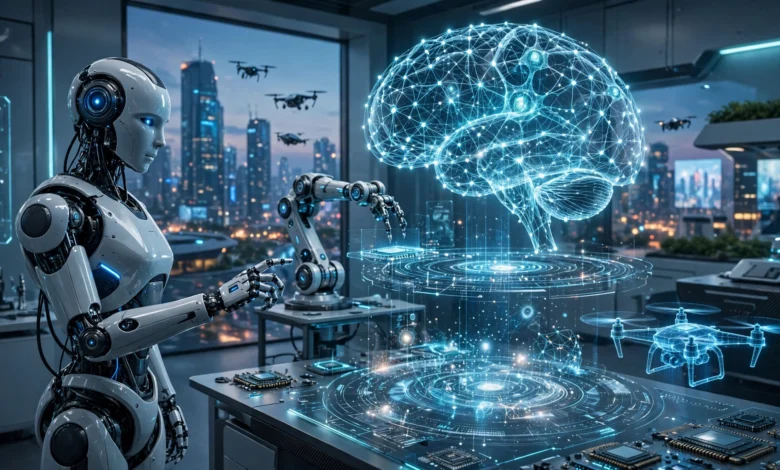
Every year brings a fresh batch of predictions about the technology that’s supposedly about to change everything, and most of it doesn’t pan out on schedule. But some shifts are real, measurable, and already reshaping how businesses operate and how people live. The emerging technology trends 2027 conversation matters because the gap between what’s technically possible and what’s legally or ethically sound keeps getting narrower and harder to see.
This article looks at fifteen technologies gaining real traction heading into 2027, from agentic AI systems to post-quantum cryptography. But instead of just hyping the upside, we’re pairing each trend with a grounded look at how it’s already been misused. Deepfake fraud has drained real companies of real money. Illegal gene editing has landed a scientist in prison. Data harvested through “smart” devices has fueled surveillance scandals that regulators are still untangling.
Understanding where a technology can go wrong is just as important as understanding where it’s headed. If you’re a business leader planning investments, a policymaker drafting rules, or just someone trying to keep up, this guide gives you a realistic picture: the genuine opportunity in each trend, and the legal and ethical guardrails that history has already shown we need.
1. Agentic AI Systems
Agentic AI refers to AI models that don’t just answer questions but take multi-step actions on your behalf: booking travel, managing inboxes, executing trades, or coordinating with other software agents. By 2027, expect these systems to move from novelty to default in customer service, IT operations, and back-office work.
The upside is real. Companies are already cutting response times and operational costs by handing repetitive, rules-based tasks to autonomous agents.
The risk is just as real. In 2024, criminals used AI-generated video and voice to impersonate a company’s CFO during a video call, convincing a Hong Kong finance employee to wire over $25 million to fraudulent accounts. That wasn’t science fiction. It was a real fraud case built entirely on synthetic media, and it’s a preview of what agentic systems could enable at scale if deployed without safeguards.
What responsible adoption looks like:
- Require human approval for any agent action involving money, contracts, or personal data
- Log every agent decision for auditability
- Train staff to verify high-stakes requests through a second channel, not just video or voice
2. Quantum Computing Reaches Early Commercial Use
Quantum computing won’t replace your laptop, but by 2027 specialized quantum processors will be doing real work in drug discovery, materials science, and logistics optimization, mostly through cloud access rather than owned hardware.
The legal flashpoint here isn’t the computing itself, it’s what quantum power means for encryption. Security researchers have long warned about “harvest now, decrypt later” campaigns, where state-linked actors steal encrypted data today, banking on future quantum machines to crack it open. This isn’t hypothetical; intelligence agencies in multiple countries have confirmed this is an active strategy against government and corporate data.
Organizations serious about long-term data protection are already migrating toward post-quantum cryptography standards published by the National Institute of Standards and Technology, which finalized its first quantum-resistant encryption algorithms specifically to get ahead of this threat.


3. Post-Quantum Cryptography Goes Mainstream
Related to the point above, expect post-quantum cryptography (PQC) to shift from an academic topic to a procurement requirement. Financial institutions, healthcare systems, and government agencies are under pressure to inventory their cryptographic systems and start migration plans now, because retrofitting encryption across a large organization takes years, not months.
The cautionary tale here isn’t hypothetical either. The 2014 Sony Pictures breach and countless subsequent ransomware attacks exploited weak or outdated encryption practices, costing companies hundreds of millions and exposing sensitive employee and customer data. Weak cryptography has been at the center of nearly every major corporate hack of the last decade.
Key steps organizations are taking:
- Cataloging where and how encryption is used across systems
- Piloting hybrid classical-quantum encryption
- Building vendor requirements around PQC readiness into contracts
4. Neuromorphic Computing and Brain-Inspired Chips
Neuromorphic computing designs chips that mimic how neurons and synapses process information, using far less power than traditional processors for certain AI tasks. This matters enormously for edge devices like sensors, wearables, and autonomous machines that can’t afford to burn through battery life running heavy AI models.
This is a genuinely exciting trend with fewer direct legal landmines than most on this list, though the underlying AI models running on this hardware still carry all the bias, privacy, and accountability questions that come with any AI deployment.
5. Synthetic Biology and Bioengineering
Synthetic biology covers everything from lab-grown materials to engineered microorganisms that produce fuels, medicines, or food ingredients. It’s one of the more genuinely transformative fields on this list, with real potential to address antibiotic resistance and food security.
It’s also a field with a documented history of catastrophic ethical failure. In 2018, a Chinese scientist announced he had used CRISPR gene-editing technology to create the world’s first gene-edited babies, altering their DNA before birth without proper ethical review or informed consent. He was later sentenced to three years in prison for illegal medical practice. The case became a global reference point for why bioengineering research needs strict oversight, not just technical capability.
Responsible development requires:
- Independent ethics review boards for any human genetic research
- Transparent reporting to regulatory bodies before clinical trials
- International coordination, since biotech regulation varies wildly by country
6. Advanced Humanoid Robotics
Humanoid robots are moving out of research labs and into warehouses, hospitals, and eventually homes. Several major manufacturers have already deployed pilot programs in logistics and manufacturing, with broader commercial rollout expected through 2027.
The legal questions here are less about crime and more about labor law and safety regulation. Workplace injuries involving robotic systems have already triggered OSHA investigations and lawsuits in manufacturing settings, and as robots take on more autonomous decision-making around humans, liability questions (who’s responsible when a robot causes harm: the manufacturer, the software developer, or the operator) remain largely unresolved in most jurisdictions.
7. 6G Research and Next-Generation Connectivity
6G networks are still in the research and standardization phase, but by 2027 expect early trials and spectrum allocation decisions that will shape the next decade of connectivity, with theoretical speeds far beyond current 5G and much lower latency for real-time applications.
Spectrum itself is a regulated public resource, and unauthorized use of radio frequencies is a real crime, not a technicality. Pirate broadcasting and unlicensed spectrum use have resulted in real fines and equipment seizures from regulators. As 6G rolls out, expect stricter enforcement around spectrum squatting and unauthorized network deployment, particularly from private 5G/6G networks operating without proper licensing.
8. Decentralized Digital Identity
Decentralized identity systems let people control their own verified credentials (age, citizenship, professional licenses) without handing that data to a central authority every time it’s needed. Several governments and tech consortiums are piloting these systems as an alternative to today’s fragmented, breach-prone identity infrastructure.
The motivation is grounded in a real, well-documented problem. SIM-swapping fraud, where criminals hijack a victim’s phone number to bypass two-factor authentication, has been used in identity theft schemes resulting in tens of millions of dollars in stolen cryptocurrency and bank funds, with multiple perpetrators prosecuted in the US and UK. Centralized identity systems create single points of failure that criminals actively target, which is exactly the problem decentralized approaches are trying to solve.
9. Deepfake Detection and Content Provenance
As generative AI makes synthetic video, audio, and images nearly indistinguishable from real ones, deepfake detection and content authentication tools are becoming essential infrastructure rather than optional add-ons. Watermarking standards and content provenance tracking (recording where a piece of media actually came from) are gaining traction among major tech platforms.
This trend exists because the abuse case is already well established. Deepfakes have been used in election disinformation campaigns in multiple countries, in non-consensual explicit imagery targeting private individuals and public figures, and in the financial fraud case mentioned earlier. Several countries have already passed or proposed legislation criminalizing malicious deepfake creation, and platforms face growing pressure to label AI-generated content.
What’s emerging as best practice:
- Cryptographic content provenance standards (like C2PA) embedded at the point of creation
- Mandatory labeling of AI-generated political or commercial content
- Legal penalties specifically targeting non-consensual synthetic imagery
10. Green Hydrogen and Clean Energy Storage
Green hydrogen, produced using renewable electricity rather than fossil fuels, is scaling up as a storage and transport solution for clean energy, particularly for industries like steel and shipping that are hard to electrify directly.
The legal risk in this space isn’t the technology itself but the money around it. Carbon credit fraud has already resulted in real prosecutions, including cases where companies sold credits for emissions reductions that never actually happened. As green hydrogen projects attract subsidies and carbon credit eligibility, expect regulators to scrutinize claims more aggressively to avoid a repeat of past carbon market fraud.
11. Brain-Computer Interfaces
Brain-computer interfaces (BCIs) are moving from medical trials (helping paralyzed patients control devices with thought) toward broader applications. Clinical trials for implanted and non-invasive BCIs have expanded significantly, with several companies racing toward commercial approval.
This is one of the most sensitive data privacy frontiers imaginable, because neural data is arguably the most personal information that exists. Several US states have already passed or proposed “neural data privacy” laws specifically because existing privacy regulations weren’t written with brain data in mind. Companies working in this space are under real pressure to build consent and data protection frameworks before, not after, deployment scales.
12. Expanded Autonomous Vehicle Deployment
Autonomous vehicles continue expanding beyond pilot cities, with robotaxi services and autonomous freight operating in more markets by 2027. The technology has matured considerably, but the legal and safety track record remains mixed.
A 2018 fatal crash involving a self-driving test vehicle in Arizona resulted in the first pedestrian death attributed to autonomous vehicle technology and led to a vehicular manslaughter charge against the human safety operator. Separately, a major robotaxi operator had its California operating permit suspended in 2023 after regulators found the company had misrepresented the safety record of its vehicles following a collision. These aren’t edge cases, they’re reminders that regulatory transparency and honest safety reporting matter as much as the underlying technology.
13. Industrial Digital Twins
A digital twin is a virtual replica of a physical system (a factory, a supply chain, a city’s infrastructure) used to simulate and optimize operations in real time. Manufacturing and infrastructure sectors are adopting these at scale to cut downtime and predict failures before they happen.
Because digital twins often contain detailed operational data, they’ve become a target for industrial espionage. Several documented cases of corporate espionage have involved employees or contractors stealing proprietary manufacturing data for use by competitors or foreign entities, resulting in criminal prosecution under trade secret laws. As digital twins concentrate more sensitive operational knowledge into single systems, protecting that data becomes a bigger priority, not a smaller one.
14. Satellite Mega-Constellations and Space Infrastructure
Low-earth-orbit satellite constellations are expanding internet access to remote regions and enabling new applications in agriculture, shipping, and disaster response. By 2027, expect continued growth in the number of active satellites and increasing competition among providers.
This trend has already intersected with international law in uncomfortable ways. Satellite internet services have been used in active conflict zones without full authorization from every government involved, raising questions about export controls and the use of dual-use technology in warfare. Unauthorized satellite frequency use has also triggered disputes at the International Telecommunication Union level. As orbit becomes more crowded and more geopolitically significant, expect tighter international rules around deployment and usage.
15. Privacy-Enhancing Technologies
Privacy-enhancing technologies (PETs), including techniques like federated learning, differential privacy, and homomorphic encryption, let organizations analyze data without exposing the raw personal information underneath it. Demand for PETs is growing directly out of stricter data protection enforcement worldwide.
The reason this trend exists is well documented: the Cambridge Analytica scandal showed how personal data harvested without proper consent could be used to build psychological profiles for political targeting, resulting in record regulatory fines and a wave of stricter data protection laws globally. The Federal Trade Commission continues to issue warnings and enforcement actions around companies mishandling consumer data, and PETs are increasingly seen as a technical answer to a legal and reputational problem companies can no longer afford to ignore.
Why the Legal and Ethical Angle Can’t Be an Afterthought
Looking across all fifteen trends, a pattern emerges: nearly every technology on this list has already been misused in a documented, prosecuted case. That’s not a reason to slow down innovation, it’s a reason to build governance into the technology from the start rather than bolting it on after something goes wrong.
Companies that treat compliance, consent, and transparency as core product requirements rather than legal checkboxes tend to avoid the expensive, reputation-damaging failures that show up in this article. The organizations getting emerging technology trends 2027 right aren’t necessarily the ones moving fastest, they’re the ones building trust alongside capability.
Conclusion
The fifteen trends shaping 2027, from agentic AI and quantum computing to synthetic biology and privacy-enhancing technologies, represent genuine progress with real business and social value. But as the examples throughout this article show, every one of these fields has already produced real fraud cases, real regulatory violations, and real harm when deployed without proper safeguards. The organizations and individuals who benefit most from this next wave of technology will be the ones who pair innovation with accountability, treating legal and ethical guardrails not as obstacles but as the foundation that makes long-term adoption possible.