10 Genius Kitchen Hacks That Save Time and Money
Discover practical kitchen hacks that cut cooking time, trim grocery bills, and reduce waste, without gimmicks or shortcuts that cross any lines.
Anyone who cooks regularly knows the kitchen can quietly become the most expensive and time-consuming room in the house. Between wasted groceries, inefficient prep work, and appliances that eat up electricity for no good reason, small inefficiencies add up fast. The good news is that most of the fixes are simple. You don’t need fancy gadgets or a culinary degree to run a smarter kitchen.
This guide covers ten practical kitchen hacks that genuinely save time and money, based on habits used by home cooks, professional chefs, and food safety experts. Every tip here is legal, safe, and realistic for an everyday household. That matters because the internet is full of viral “hacks” that are really just disguised shortcuts around the law, think rigged utility meters, relabeling expired food, or other schemes that occasionally pop up in news stories about fraud. Those aren’t hacks. They’re liabilities. This article skips all of that and sticks to things you can actually use without putting your health, your wallet, or your reputation at risk.
Whether you’re trying to stretch a grocery budget, get dinner on the table faster on weeknights, or just stop throwing away food you forgot about, these tips are built for real kitchens and real schedules.
Why Smart Kitchen Habits Matter More Than Gadgets
Before getting into the list, it helps to understand why kitchen hacks that save time and money work better as habits than as one-time purchases. A $40 gadget that sits in a drawer saves you nothing. A five-minute habit you repeat every week, on the other hand, compounds over months and years.
According to the USDA, households in the U.S. waste a significant portion of the food they buy, much of it from poor planning and storage rather than genuinely spoiled ingredients. That single fact explains why so many of the best kitchen hacks below focus on storage, prep, and planning instead of equipment.
1. Batch Prep Your Ingredients Once a Week
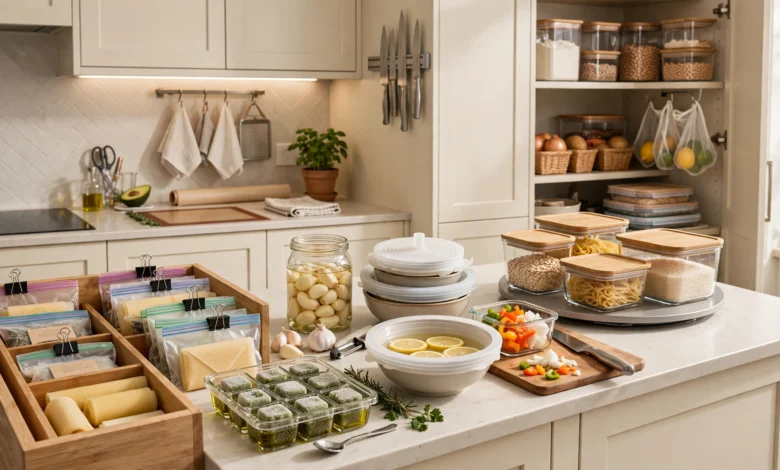
One of the most effective time-saving kitchen hacks is also one of the simplest: set aside one block of time each week to wash, chop, and portion your ingredients.
How to Do It
- Pick one day (Sunday works for most people) and spend 45 to 60 minutes prepping.
- Wash and chop vegetables that hold up well in the fridge, like onions, peppers, carrots, and celery.
- Cook a base protein (shredded chicken, ground beef, or beans) that can go into multiple meals.
- Store everything in clear containers so you can see what’s ready to use.
This single habit removes the biggest barrier to cooking at home on a weeknight, which is the mental and physical effort of starting from zero every single day. When the chopping is already done, a 45-minute dinner becomes a 15-minute one.
2. Freeze Scraps for Homemade Stock
Vegetable peels, onion skins, carrot tops, and herb stems usually go straight into the trash. Instead, keep a freezer bag or container specifically for scraps.
Why This Works
- Once the bag is full, simmer the scraps with water for an hour to make a free, flavorful stock.
- This cuts down on store-bought broth, which can run several dollars per carton.
- It also reduces food waste, which saves money twice: once on the broth you didn’t buy, and once on the groceries you didn’t throw out.
This is one of those money-saving kitchen hacks that feels almost too simple to work, but it genuinely does.
3. Buy Staples in Bulk, Strategically
Bulk buying only saves money when you’re buying things you’ll actually use before they go bad. Rice, dried beans, oats, flour, and frozen vegetables are reliable bulk purchases because they store well.


A Few Ground Rules
- Only buy in bulk what you use at least once every two weeks.
- Store dry goods in airtight containers to extend shelf life and prevent pests.
- Split large bulk purchases with a friend or family member if a single package is more than you’ll use.
Buying in bulk without a plan is how pantries end up full of forgotten, stale ingredients. Buying in bulk with a plan is one of the most reliable kitchen hacks that save time and money over the course of a year.
4. Use One Pan (or One Pot) Whenever Possible
Sheet-pan dinners and one-pot meals have become popular for a reason. They cut down on both cooking time and cleanup time, which is really two savings in one.
Examples
- Roast a protein and vegetables together on a single sheet pan.
- Make soups, stews, or grain bowls in one pot, building flavor in layers as you go.
- Use a slow cooker or pressure cooker for meals that need minimal supervision.
Fewer dishes means less water, less dish soap, and less time standing at the sink after a long day. It’s a small shift that pays off every single time you cook.
5. Keep a Running Inventory of What’s in Your Fridge and Pantry
A huge chunk of food waste happens simply because people forget what they already have. Keeping a basic inventory, even a handwritten list on the fridge, prevents duplicate purchases and reminds you to use things before they spoil.
Simple Ways to Track It
- Use a whiteboard or notepad stuck to the fridge door.
- Group items by how quickly they need to be used (this week, this month, long-term).
- Do a quick five-minute check before every grocery trip.
This hack costs nothing and takes almost no time, yet it directly addresses the root cause of wasted groceries.
6. Learn Correct Food Storage Methods
Not all food waste comes from overbuying. A lot of it comes from improper storage that causes food to spoil faster than it should. Herbs wilt in the crisper drawer, bread goes stale on the counter, and berries get fuzzy within days because they weren’t stored properly.
Storage Basics Worth Knowing
- Store herbs like a bouquet, in a glass of water in the fridge, to extend their life by days or weeks.
- Keep bread in a bread box or freezer rather than directly on the counter.
- Store tomatoes at room temperature, not in the fridge, to preserve texture and flavor.
- Follow guidance from FoodSafety.gov on safe storage temperatures and timelines to avoid both waste and foodborne illness.
Getting storage right is one of the most underrated kitchen hacks because it directly extends the life of food you’ve already paid for.
7. Repurpose Leftovers Instead of Tossing Them
Leftovers often get pushed to the back of the fridge and forgotten. With a bit of planning, they can become the base for an entirely new meal instead of a sad reheated plate.
Ideas for Repurposing
- Turn leftover roasted vegetables into a frittata or grain bowl.
- Use leftover rice for fried rice the next day.
- Blend overripe fruit into smoothies or freeze it for later baking.
- Turn leftover roast chicken into soup, tacos, or sandwiches.
This approach stretches a single grocery trip across more meals, which is exactly the kind of practical, money-saving kitchen hack that adds up over a month.
8. Sharpen Your Knives Regularly
This one sounds minor, but it has a real impact on both time and safety. A dull knife takes longer to cut through food, increases the risk of slipping, and makes prep work far more tiring than it needs to be.
Maintenance Tips
- Use a honing rod before each use to realign the blade edge.
- Have knives professionally sharpened every six months, or learn to do it yourself with a whetstone.
- Store knives in a block or on a magnetic strip rather than loose in a drawer, which dulls the edge faster.
A sharp knife cuts prep time significantly and makes the entire cooking process smoother, which is why professional kitchens treat knife maintenance as non-negotiable.
9. Plan Meals Around What’s on Sale
Instead of deciding what to cook and then shopping for it at full price, flip the process. Check your grocery store’s weekly sale flyer first, then build your meals around the discounted items.
How to Approach It
- Check sales for proteins and produce before making your shopping list.
- Buy extra of sale items that freeze well, like meat, bread, or butter.
- Keep a small rotation of “go-to” recipes that are flexible enough to work with whatever’s on sale that week.
This habit takes a little more planning upfront, but it consistently lowers the total cost of groceries without sacrificing variety.
10. Maintain Your Appliances
A kitchen that runs efficiently depends on appliances that actually work the way they’re supposed to. A fridge with a dirty condenser coil, an oven with a miscalibrated thermostat, or a dishwasher with a clogged filter all work harder than necessary, which costs you in both time and energy bills.
Simple Maintenance Steps
- Clean the fridge coils every six months to keep it running efficiently.
- Check your oven’s temperature accuracy with an inexpensive oven thermometer.
- Clean the dishwasher filter monthly to keep it running at full strength.
- Defrost the freezer if ice buildup is affecting storage space or efficiency.
The U.S. Department of Energy notes that well-maintained appliances use less electricity over their lifespan, which translates directly into lower utility bills over time.
A Quick Note on Ethics and Realistic Expectations
It’s worth being direct about something: not every “hack” circulating online is actually a hack. Over the years, there have been real cases of people getting into legal trouble for things like tampering with utility meters to cut electricity costs, relabeling expired products to resell them, or running counterfeit coupon schemes to game grocery discounts. These aren’t clever shortcuts. They’re fraud, and they carry real consequences, including fines and criminal charges.
The kitchen hacks in this guide are intentionally different. They rely on planning, better habits, and basic food science, not loopholes or dishonesty. That’s also why they hold up over time. A legal, practical habit you can repeat every week will save you far more money over a year than any risky shortcut that might save you a few dollars once before causing a much bigger problem.
Conclusion
Running an efficient kitchen doesn’t require expensive tools or complicated systems. It comes down to a handful of consistent habits: prepping ahead, storing food correctly, reducing waste, maintaining your equipment, and planning meals with a bit more intention. The ten kitchen hacks that save time and money covered here are simple enough to start using this week, and they’re all grounded in realistic, ethical practices rather than gimmicks or workarounds that could land you in trouble. Start with one or two that fit your routine, and build from there. Small, repeatable changes are what actually move the needle in a home kitchen.